Peyote's Roots, Impacts, Dangers, and Advantages: Exploring Its Uses and Consequences
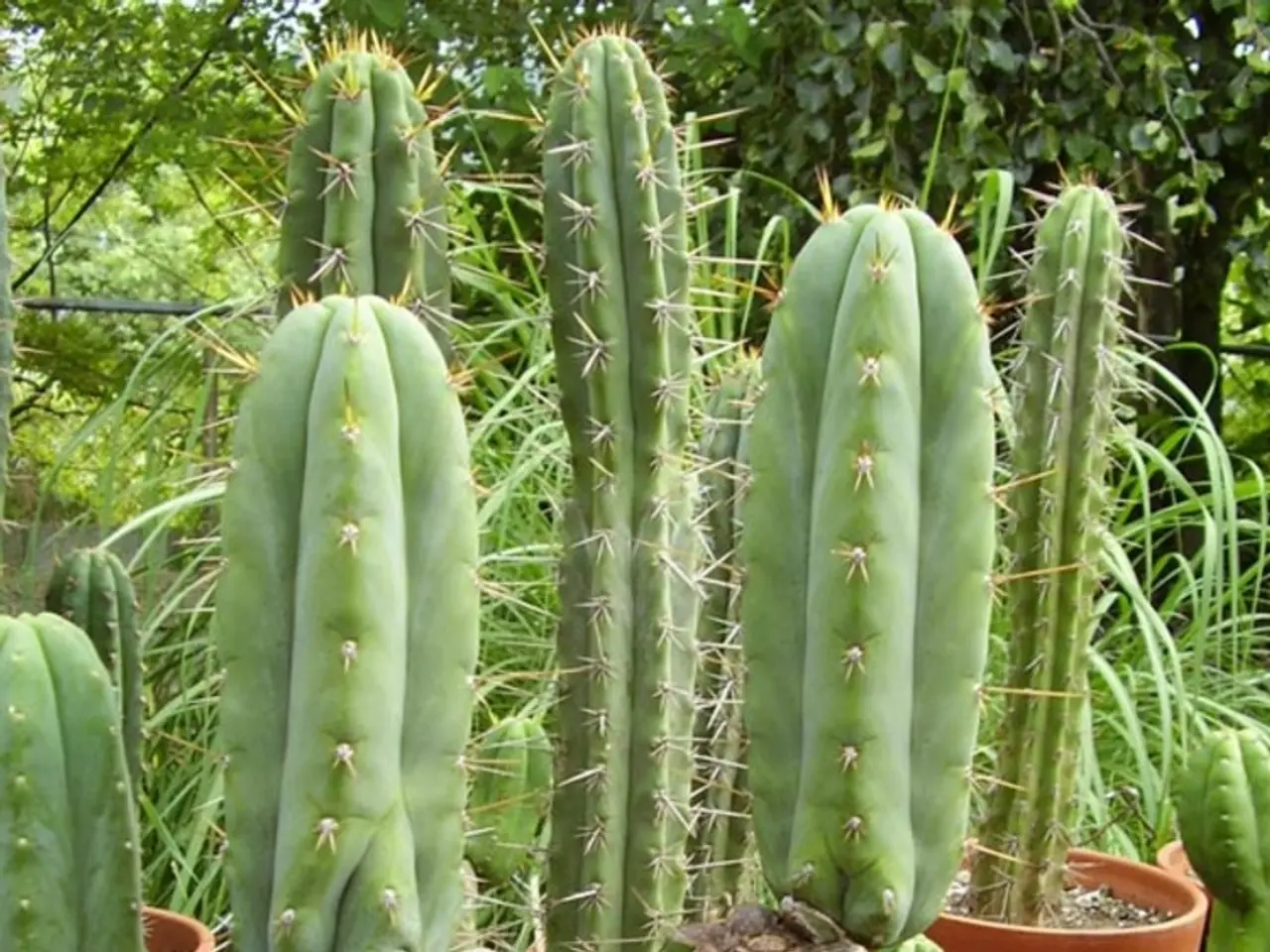
In the vast expanse of North America, the button-shaped peyote cactus (Lophophora williamsii) has long been revered for its unique properties. Known for its hallucinogenic effects, peyote has played a significant role in the spiritual and medicinal practices of various Native American tribes and Indigenous peoples.
**Traditional Uses in Native American Culture**
For thousands of years, peyote has been an integral part of the rituals and ceremonies of tribes such as the Huichol, Tarahumara, and those residing in the Rio Grande Valley and Southwestern United States. These ceremonies, often lasting from sundown to sunrise, involve drumming, singing, shared prayers, and communal consumption, typically through chewing dried buttons or drinking tea made from the cactus.
These rituals serve not only as a means of spiritual connection but also as a cultural resistance against the influence of colonization, emphasizing community healing, honoring ancestors, and re-establishing spiritual ties with the earth, gods, and ancestors.
**Potential Health Benefits**
Peyote has been considered "strong medicine" and was traditionally used to treat ailments introduced by Europeans such as alcoholism, tuberculosis, and venereal diseases. Its analgesic properties have been indicated by its use by Indian healers and early U.S. Army medics. Fresh cactus buttons were also applied topically as poultices to treat fractures, snake bites, and insect or animal bites, with anecdotal reports of rapid reduction in pain and inflammation. Some Native Americans also consume peyote in small amounts as a tonic to maintain health.
**Broader Cultural and Historical Context**
Peyote belongs to a group of traditional psychedelics used globally for spiritual and healing purposes, similar to ayahuasca in South America or psilocybin mushrooms in Mexico. Unlike ayahuasca ceremonies that emphasize emotional catharsis and inner journeys, peyote ceremonies focus on communal prayer and spiritual connection to the earth and ancestors, reflecting different cultural cosmologies and ritual aims.
**The Hallucinogenic Effects of Peyote**
Peyote contains a compound called mescaline, which is responsible for its hallucinogenic effects in humans. The effects of mescaline may begin within an hour and can last for around 12 hours as the body breaks down the compound. Hallucinations caused by mescaline may affect multiple senses and involve a mixing of the senses, such as seeing sounds or feeling colors.
The use of peyote can lead to psychedelic or hallucinogenic trips, with effects varying among individuals. However, overdosing on mescaline is rare, and treatment generally involves addressing any problematic symptoms that arise.
While some users believe that peyote has a vast number of health benefits for the body, these claims are not backed by Western medicine due in part to the fact that it is a Schedule 1 drug in the U.S., making it difficult to obtain and study.
It's important to note that hallucinogens like peyote may cause temporary physical reactions such as increased heart rate, numbness, tension, increased blood pressure, fever, chills, muscle weakness, headaches, dilated pupils, nausea, vomiting, sweating, shivering. Additionally, continuous mental problems and disturbances called persistent psychosis are a long-term concern, but this is very rare.
In conclusion, peyote's traditional use combines spiritual, communal, and medicinal elements. It is celebrated not only for inducing profound psychedelic experiences but also as a sacred medicine with healing, pain-relieving, and tonic benefits within Native American religious and cultural practices.
- Despite its unique properties, the health benefits of peyote are not extensively supported by Western medicine due to its classification as a Schedule 1 drug.
- Peyote, with its hallucinogenic effects, is primarily used in Native American rituals to foster spiritual connections and cultural resistance.
- Traditional Native American healers used peyote to treat ailments such as alcoholism, tuberculosis, and venereal diseases, among others.
- Peyote, specifically its active compound mescaline, has been reported to alleviate pain and inflammation in certain instances.
- Native Americans sometimes consumed peyote in small amounts as a health tonic to maintain overall well-being.
- Peyote belongs to a group of traditional psychedelics used globally for spiritual and healing purposes, such as ayahuasca and psilocybin mushrooms.
- Unlike ayahuasca ceremonies, peyote ceremonies emphasize communal prayer and spiritual connection to the earth and ancestors.
- As the body metabolizes mescaline, hallucinations may last for around 12 hours, affecting multiple senses and causing a mixing of the senses.
- Although peyote use can lead to psychedelic experiences, overdosing on mescaline is uncommon, and treatment usually involves managing problematic symptoms.
- Continuous use of peyote may lead to temporary physical reactions, such as increased heart rate, dilated pupils, and nausea.
- Long-term use of hallucinogens like peyote can potentially result in persistent psychosis, but this is extremely rare.
- Apart fromNative American cultural practices, peyote has been used to treat various medical conditions, including diabetes, COPD, ankylosing spondylitis, and depression.
- Some Native Americans have also used peyote to manage mental health conditions like bipolar disorder and psoriasis, a type of skin disease.
- The scientific study of peyote's potential predictive power in diseases like Alzheimer's, cancer, and macular degeneration is ongoing but largely unproven, revealing the need for more research in the field of health and wellness.