
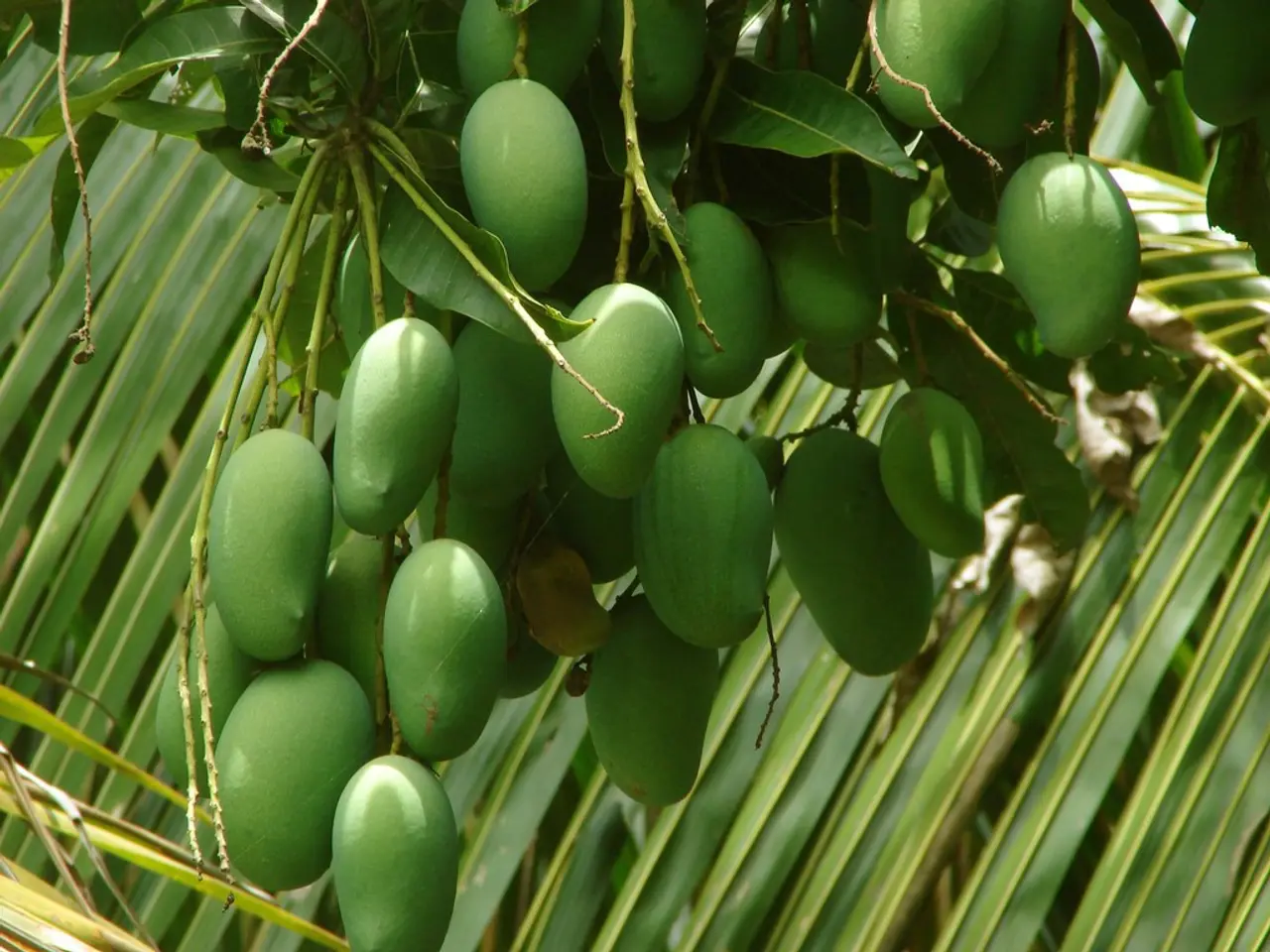
Mangoes Explored: Discovering Their Nutritional Advantages, Culinary Uses, and Delicious Recipes
Mangoes, a tropical fruit beloved for their sweet and tangy flavour, are not just a tasty treat but also offer a host of health benefits. These juicy fruits, members of the drupe family that also includes olives, dates, and coconuts, are rich in essential vitamins and minerals.
Ripe mangoes yield slightly to the touch and do not have black freckles on the skin. They can be enjoyed in various ways, from being muddled into refreshing drinks like lemonade, iced tea, or water, to starring in exotic salads with papaya, pineapple, and other tropical fruits. For a burst of flavour on fish tacos, fresh salsa made with mango, jalapeno, red peppers, and chipotle pepper makes an excellent topping.
For those who prefer a more savoury dish, chipotle mango guacamole is a delightful choice. Simply combine extra-virgin olive oil, Roma tomatoes, onion, dried chipotle chillies, avocado, lime juice, and mango to create this tantalising dip.
Mangoes are also a good source of potassium, with a 165-g cup providing 277 milligrams. This essential mineral helps keep the arteries working and reduces the risk of heart disease. Moreover, a cup of sliced mango provides about 67% of a person's daily requirement for vitamin C.
Different types of mangoes vary in colour, shape, flavour, and seed size. The Keitt mango, for example, is large and oval-shaped, with a tangy, citrus flavour and juicy flesh. It is mainly grown in Mexico, Ecuador, Brazil, and the U.S. On the other hand, the Honey, or Ataulfo, mango is sweet and sour with a tropical, peachy aroma. It has a high flesh-to-seed ratio and is primarily grown in Mexico, Peru, Ecuador, and Brazil.
However, it's important to note that mangoes can cause a reaction similar to a poison ivy rash on a person's face within hours. This is due to a substance called urushiol, which is present in trees that mangoes grow on. Therefore, it's advisable to wash your hands thoroughly after peeling or cutting a mango.
While not typically classified as drupes in the same way as stone fruits like plums, mangoes do share some nutritional similarities with drupes. For instance, mangoes contain antioxidants like mangiferin and quercetin, which support immune function and protect against oxidative stress.
Similar health benefits can be found in other fruits that are members of the drupe family, such as plums, cherries, apricots, peaches, and nectarines. These fruits are rich in vitamins A and C, potassium, and fiber, supporting healthy digestion and immune function. They also contain antioxidants that can help reduce inflammation and protect against chronic diseases.
In addition to mangoes, other non-drupe fruits like thimbleberries offer similar benefits. Thimbleberries are a good source of vitamins A and C, providing antioxidant benefits and supporting immune function. In traditional medicine, Thimbleberry roots and leaves have been used to reduce digestive issues.
In conclusion, whether enjoyed slightly chilled or used in creative recipes like salsa, guacamole, or black bean burgers, mangoes are a delightful addition to any meal. Their health benefits, including their rich vitamin and antioxidant content, make them a nutritious choice for maintaining overall health and well-being.
[1] Nutrition and Health Claims for Plums, Cherries, and Apricots, Peaches, and Nectarines. (n.d.). Retrieved from https://www.fruitinfo.com/nutrition-and-health/ [2] Health Benefits of Mangoes. (n.d.). Retrieved from https://www.healthline.com/nutrition/health-benefits-of-mangoes [3] Thimbleberry Nutrition Facts & Calories. (n.d.). Retrieved from https://nutritiondata.self.com/facts/fruits-and-fruit-juices/2135/2 [4] Thimbleberry Health Benefits. (n.d.). Retrieved from https://www.healthline.com/nutrition/thimbleberry-health-benefits
- The nutrition and health claims for plums, cherries, apricots, peaches, and nectarines are similar to those of mangoes, all being members of the drupe family.
- A burst of flavour can be added to fish tacos with fresh salsa made from mango, jalapeno, red peppers, and chipotle pepper.
- For those who prefer a more savoury dish, chipotle mango guacamole is a delightful choice, combining extra-virgin olive oil, Roma tomatoes, onion, dried chipotle chillies, avocado, lime juice, and mango.
- Mangoes are rich in essential vitamins and minerals, offering a host of health benefits, with a 165-g cup providing 277 milligrams of potassium.
- Different types of mangoes vary in colour, shape, flavour, and seed size, such as the Keitt mango and the Honey, or Ataulfo, mango.
- It's important to note that mangoes can cause a reaction similar to a poison ivy rash on a person's face within hours due to the substance called urushiol.
- Mangoes do share some nutritional similarities with drupes, as they contain antioxidants like mangiferin and quercidin, which support immune function and protect against oxidative stress.
- In addition to mangoes, other non-drupe fruits like thimbleberries offer similar benefits, being a good source of vitamins A and C, providing antioxidant benefits and supporting immune function.
- Mangoes can be enjoyed in various ways, from being muddled into refreshing drinks like lemonade, iced tea, or water to starring in exotic salads with papaya, pineapple, and other tropical fruits.
- Thimbleberry roots and leaves have been traditionally used to reduce digestive issues, similar to their counterparts in the drupe family.