Legendary Primatologist Jane Goodall Dies at 91, Leaving Indelible Mark on Chimpanzee Understanding
Legendary primatologist Jane Goodall, who passed away recently at the age of 91, left an indelible mark on our understanding of chimpanzees. Her groundbreaking work spanned several decades, and she was recently honoured as one of the oldest guests on The Uprising, gifting the show an iconic stick used by a chimpanzee named Greybeard.
Goodall's career began in Tanzania, where she integrated herself into wild chimpanzee communities. This novel approach allowed her to make unprecedented discoveries, including the first evidence of tool use by chimpanzees. She observed chimpanzees using sticks to extract termites and ants from their nests, challenging the prevailing notion of these animals' capabilities.
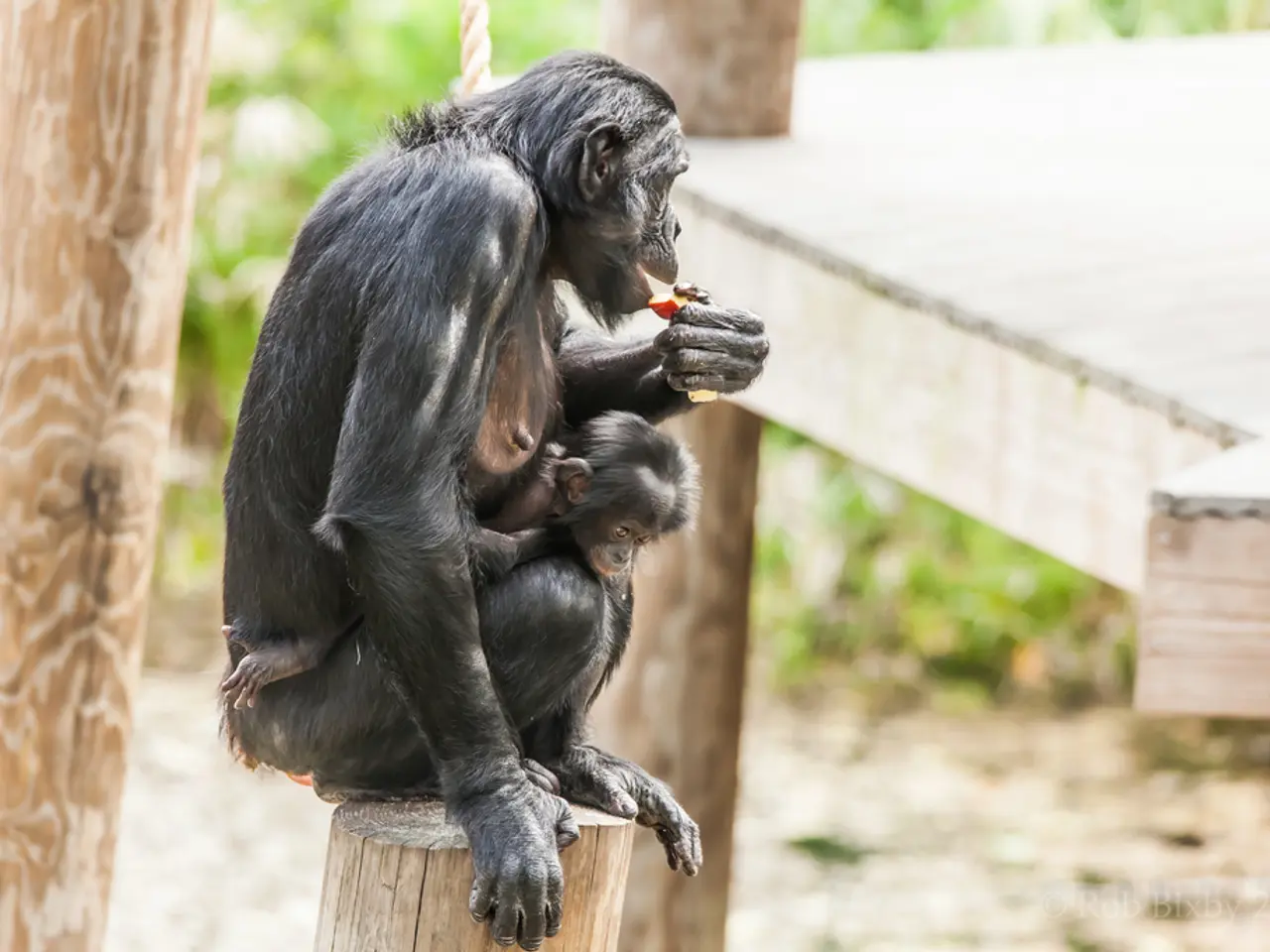
Goodall's work also revealed the complex social structures of chimpanzees. She noted strong bonds between mothers and their offspring, and observed different personalities among individuals. One memorable example was an elderly female chimpanzee who had 72 relationships in a single day. Male-dominated societies, however, often led to conflicts, with 'bully' males harassing others. Remarkably, only two chimpanzees showed aggression towards Jane Goodall and her team throughout her career.
Jane Goodall's contributions to our understanding of chimpanzees are immeasurable. Her discoveries, including the use of tools and the intricacies of chimpanzee social structures, have reshaped our view of these remarkable animals. Her legacy continues to inspire and inform primatological research today.
Read also:
- Inadequate supply of accessible housing overlooks London's disabled community
- Strange discovery in EU: Rabbits found with unusual appendages resembling tentacles on their heads
- Duration of a Travelling Blood Clot: Time Scale Explained
- Fainting versus Seizures: Overlaps, Distinctions, and Proper Responses