Commemoration and camaraderie: a fresh addition to the symbolic structure representing thoughts and feelings
In the heart of Koblenz, Germany, the Church of Our Lady serves as a beacon of remembrance and hope. For three decades, the Koblenz AIDS Memorial Service has been held annually at this hallowed site, marking World AIDS Day with a poignant ecumenical service.
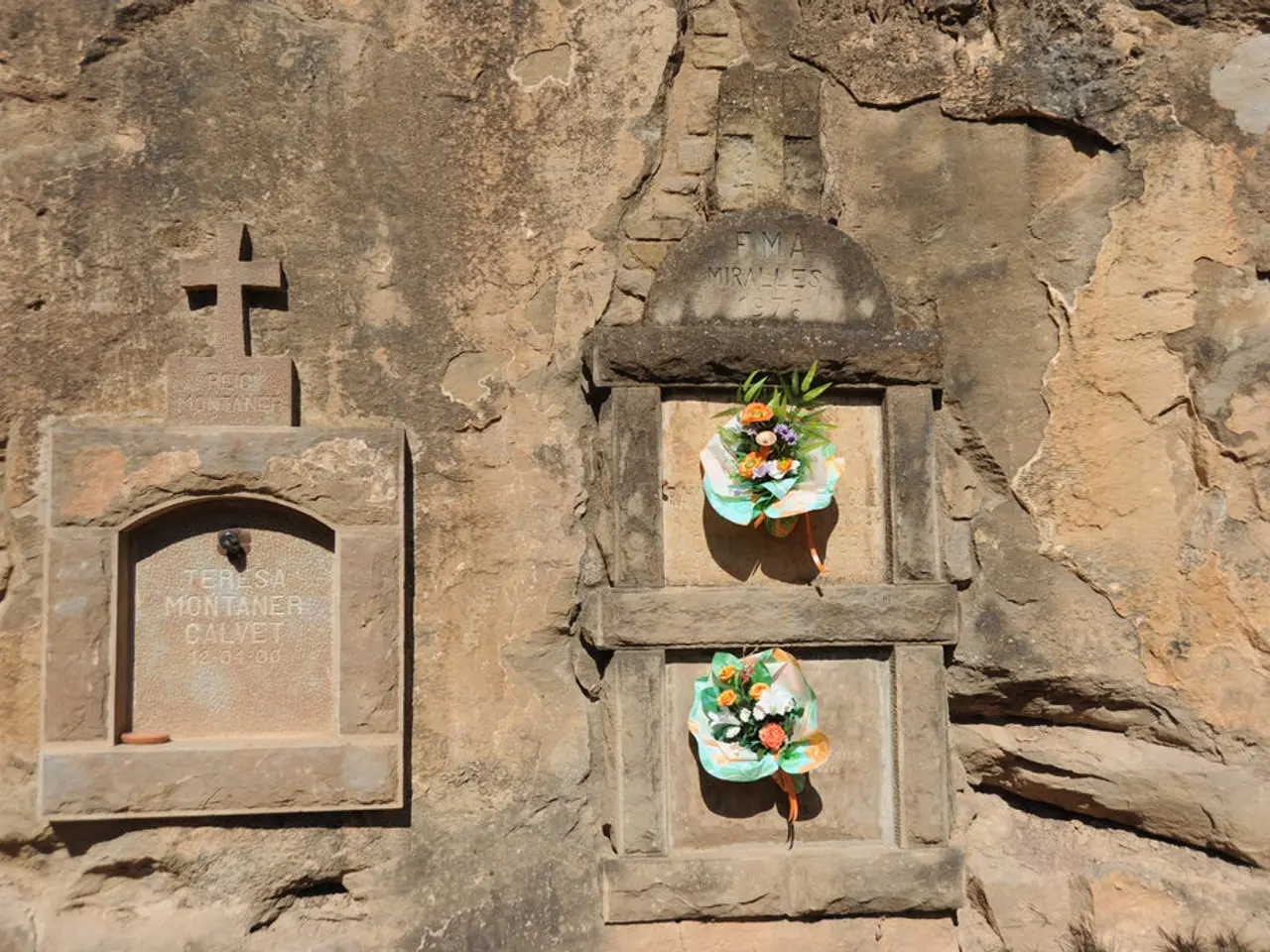
Recently, another memorial stone was placed in memory of a long-standing member of the working group, a testament to the enduring impact of this service. The working group, consisting of Rat und Tat e.V. (AIDS Help Koblenz), the Ecumenical Working Group City Pastoral, and the Caritas Association of Koblenz, maintains the Reflection Space on the north side of the Church of Our Lady, which serves as a central place of remembrance throughout the year.
The Reflection Space is part of the nationwide project "Names and Stones," a movement that honours the lives lost to AIDS-related complications. The installation contains stones with engraved names, each a symbol of a life cut short. There are 26 memorial sites across Germany as part of this project, a powerful reminder of the widespread impact of the disease.
The Koblenz AIDS Memorial Service aims to convey hope, break down barriers, and overcome inhibitions. All those affected by HIV or AIDS, relatives, friends, and interested parties are invited to attend. The response to the service indicates that many people in the region are addressing the issue and often overcoming existing inhibitions.
The service is held regularly around World AIDS Day and is open to all. It is an opportunity for the community to come together, to remember, to heal, and to reaffirm their commitment to fighting the disease. The service serves as a poignant reminder of the lives lost, and a beacon of hope for those still affected.
While the "Names and Stones" project may share similarities with the Stolpersteine Project, initiated by German artist Gunter Demnig in 1996, the specific connection between the two is not explicitly stated. However, the concept of using stones to remember victims aligns with the Stolpersteine Project, which aims to remember the victims of Nazi Germany by installing brass-plated stones in front of their last voluntary residences.
Regardless of its connection to other memorial projects, the Koblenz AIDS Memorial Service stands as a testament to the power of community, remembrance, and hope. It serves as a reminder that, even in the face of adversity, we can come together to honour the lives we have lost and to strive for a better, healthier future.
The working group, in their efforts to remember lives lost to AIDS-related complications, has expanded the Reflection Space to include therapies-and-treatments for mental-health, recognizing the importance of holistic health-and-wellness in coping with the disease. This initiative underscores the hope of the Koblenz AIDS Memorial Service, aiming not only to remember lives lost but also to encourage other communities to support mental-health initiatives alongside scientific research in the fight against the disease.